How the weekly ranking works
One vote per prompt, a fresh count every Monday, and a simple tie-break. Everything about how prompts reach the top three, in plain words.
Tell Claude the exam, the date and what you already know, and get a week by week plan that puts your weakest topics first and keeps the last days for practice tests, not new material.
I have an exam coming up and I need a study plan that fits my real life, not an ideal one.

The exam: [NAME, e.g. AWS Solutions Architect Associate, A-level chemistry, the driving theory test]
Exam date: [DATE]. Today is [DATE].
Hours I can honestly study per week: [NUMBER], usually [DAYS OR TIMES]
Topics on the syllabus: [LIST, or "look it up, it's a public exam"]
Where I am now: [e.g. comfortable with X and Y, never touched Z, scored 58% on a practice test]
Materials I have: [BOOKS, COURSES, PRACTICE TESTS]

Build the plan like this:
- Week by week, with a few lines per week on what to cover and what "done" looks like.
- Weak topics go early, while I still have time to get stuck and recover.
- Every week ends with a short retrieval session on earlier weeks, not just the new material.
- The last [N] days are practice tests and review only. No new topics.
- If the hours I gave you aren't enough for the syllabus, say so at the top and tell me what to skim, rather than squeezing everything in.

Finish with the three things most likely to go wrong with this plan and how I'd notice early.
Straight answer first: 6 hours a week for 7 weeks is 42 hours. That's enough for this exam given you're already at 58% on a practice test, but only if the plan skims what you already pass. I've marked two areas to skim.
NoteThis is an example. Results change between runs and model versions. Claude Prompts is a fan project and is not affiliated with Anthropic.
Everything in the plan hangs on "hours I can honestly study per week". Put the number you managed last month, not the one you're hoping for. The prompt asks Claude to say up front when the hours don't cover the syllabus, and that warning only helps if the number underneath it is true. A plan built on twelve hours a week that you'll deliver six of is worse than no plan, because you'll be behind from week one and feel it.
The instinct is to warm up with the topics you like. The plan does the opposite, because a topic you're stuck on in week two still has five weeks to sort itself out, and the same topic in week six has none. It also means the retrieval sessions keep bringing the hard material back while it's still fresh, which is what turns "I understood it once" into something you can do under exam conditions.
The "what's most likely to go wrong" section is a set of early warnings. It tells you which score to watch and which week to borrow time from. When you do fall behind, paste the plan back in with what actually happened and ask for a revised version from today. Rebuilding is cheap. Pretending you're on schedule is not.
Use the copy button above. The full text is included, nothing is cut off.
Everything highlighted in yellow is a placeholder. Swap it for your own topic, audience or data.
If the result helped, press the heart. Votes decide which prompts make the weekly top 10.
Tutor: Before any formulas: you put 100 euros in a bank that pays 10% interest a year. How much do you have after one year? You: 110. Tutor: Good. In year two, is the 10% calculated on the original 100, or on something else?...
Makes Claude a patient tutor that gets you to the answer with questions and hints, so you end up actually understanding the topic.
Everything fits except the conference talk outline, which I've pushed to the following week (see the note at the end). Monday Morning (your best hours) 8:30 to 10:00 write the Q4 proposal draft. 10:15 to 11:00 keep going, or...
Give Claude your tasks, your fixed appointments and when you actually have energy, and get a week plan that puts hard work where you can do it.
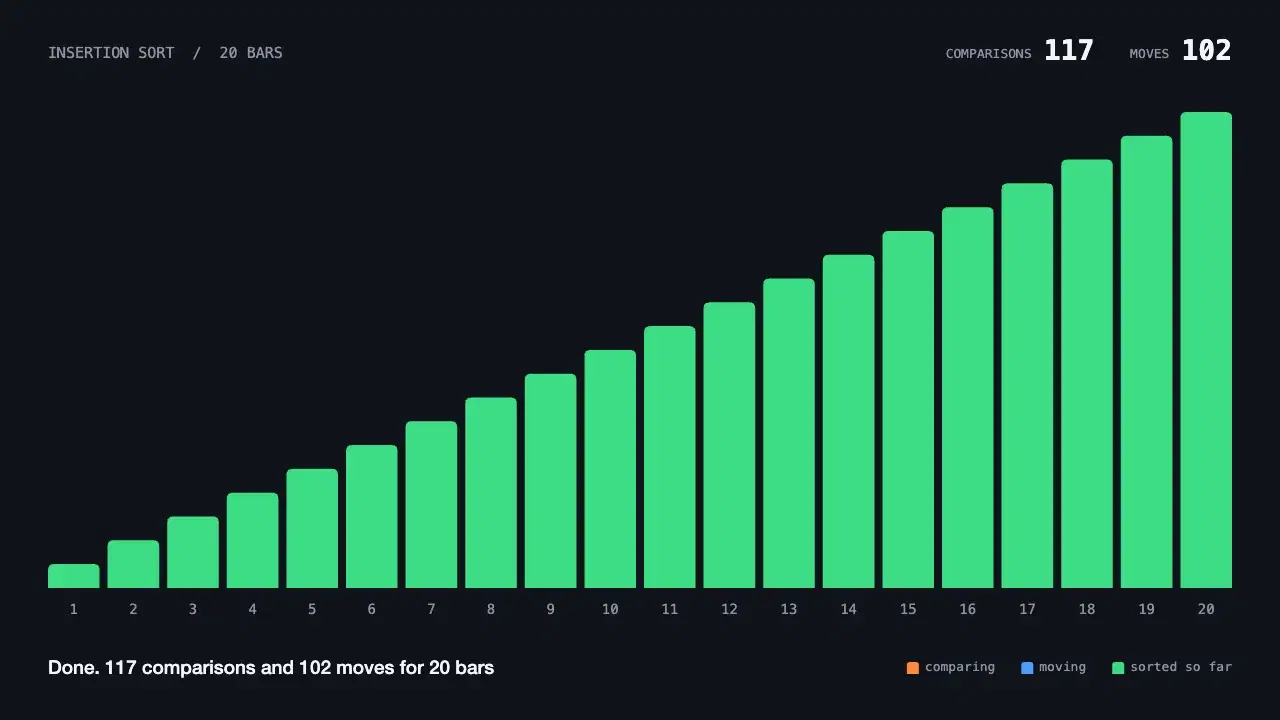
Name the algorithm you're stuck on and get a small HTML page that sorts a row of bars one step at a time, with the compared pair lit up, a count of comparisons and swaps, and a plain words line saying what's happening right now.
One vote per prompt, a fresh count every Monday, and a simple tie-break. Everything about how prompts reach the top three, in plain words.
Wrapping parts of your prompt in simple tags is one of the easiest ways to get more reliable answers from Claude. A practical guide with examples.