How the weekly ranking works
One vote per prompt, a fresh count every Monday, and a simple tie-break. Everything about how prompts reach the top three, in plain words.
Describe a process in a few sentences, the way you'd explain it to a new colleague, and get it back as a clean SVG flowchart with one shape per meaning, yes and no on every branch, and the loop drawn where your words had one.
Turn this into a flowchart as a single SVG file.

The process, in my words:
<process>
[e.g. When a refund request comes in, we first check if it was bought within 30 days. If not, we offer store credit instead and we're done. If it was, we check whether the item has come back to us. If it hasn't, we send a prepaid return label and wait. Once it's back, we refund to the original payment method, which takes 3 to 5 days, then email the customer to confirm.]
</process>

Rules:
- One shape per meaning: a rounded pill for start and end, a diamond for a question, a rectangle for an action. Nothing else.
- Every question has exactly two exits, labelled yes and no. If my description has a question with three answers, make it two questions.
- Flows top to bottom or left to right, your call, with connectors that don't cross. Loops ("wait, then check again") are drawn as a line back to the question, not as a new box.
- Short labels, under eight words, in the words I used. Anything longer goes in a numbered note under the chart.
- Real SVG text in a system font, a legend in one corner, and a title.
- If my description skips a step or leaves a branch hanging, add the box with a dashed border and tell me under the chart what you assumed.

Give me the SVG and nothing else, apart from the assumptions.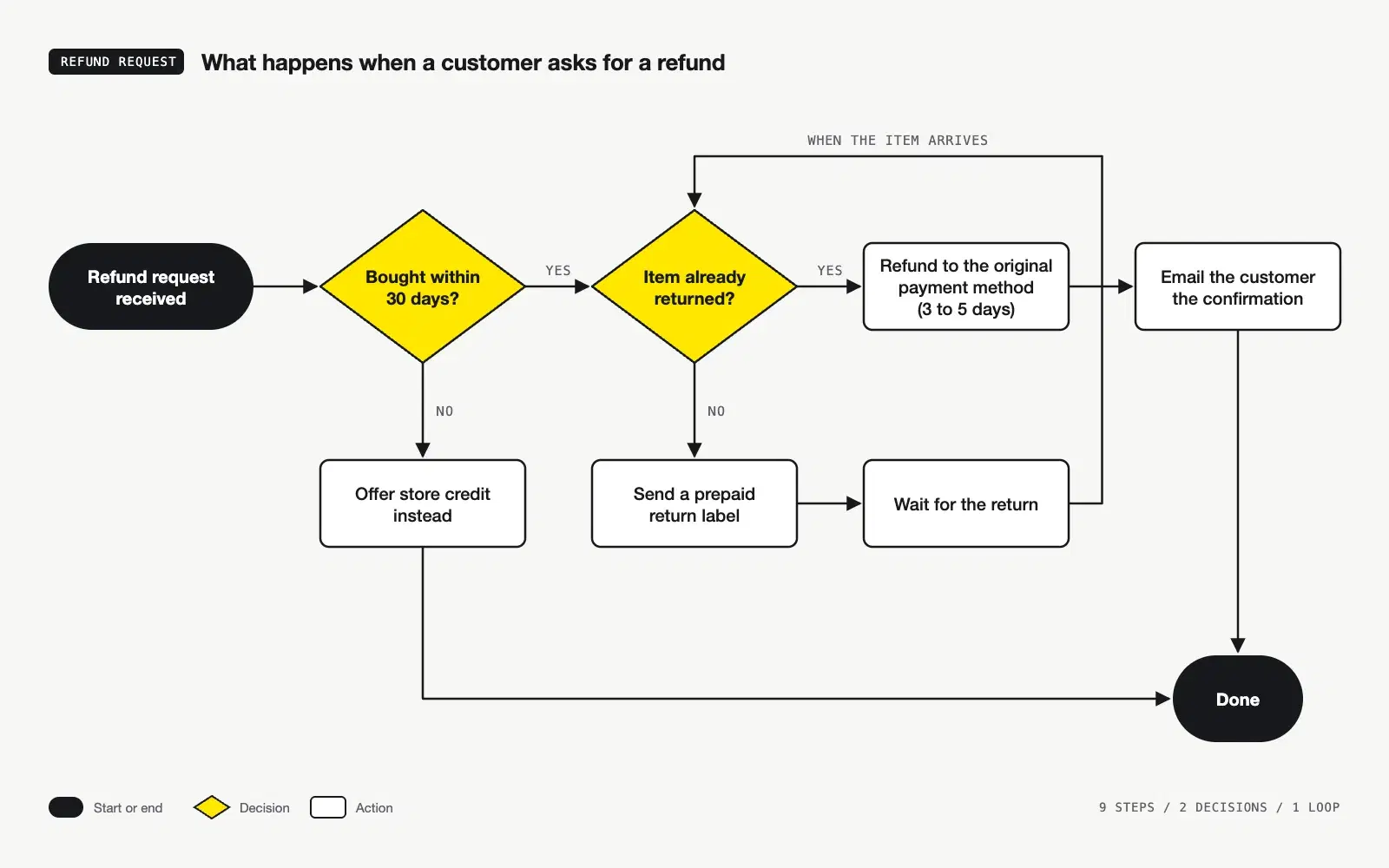
One SVG: the refund process as a start pill, two diamonds with yes and no exits, action boxes for the store credit, the return label, the refund and the confirmation email, a loop from the label back to the "item returned?" question, an end pill, and a legend in the corner.
NoteThis is an example. Results change between runs and model versions. Claude Prompts is a fan project and is not affiliated with Anthropic.
Writing a process down in prose lets you skip things without noticing. Drawing it doesn't: a diamond with one exit, or an action with no arrow out, is visible at once. That's why the prompt asks Claude to draw the missing box with a dashed border and tell you what it assumed, rather than quietly completing it. Those dashed boxes are usually the point of the exercise.
"Is the order domestic, EU or international?" is three questions pretending to be one, and a diamond with three arrows gets messy fast. The rule that each diamond has a yes and a no keeps the chart readable, and it tends to improve the process as well, because you have to decide which check happens first.
Open the file in Figma, Illustrator or a text editor. The text is real text, so renaming a step is a two second job, and the shapes are grouped by node. For a second version, paste the SVG back with the change in words ("the return label step now has a 14 day limit") and ask for the updated chart.
Use the copy button above. The full text is included, nothing is cut off.
Everything highlighted in yellow is a placeholder. Swap it for your own topic, audience or data.
If the result helped, press the heart. Votes decide which prompts make the weekly top 10.
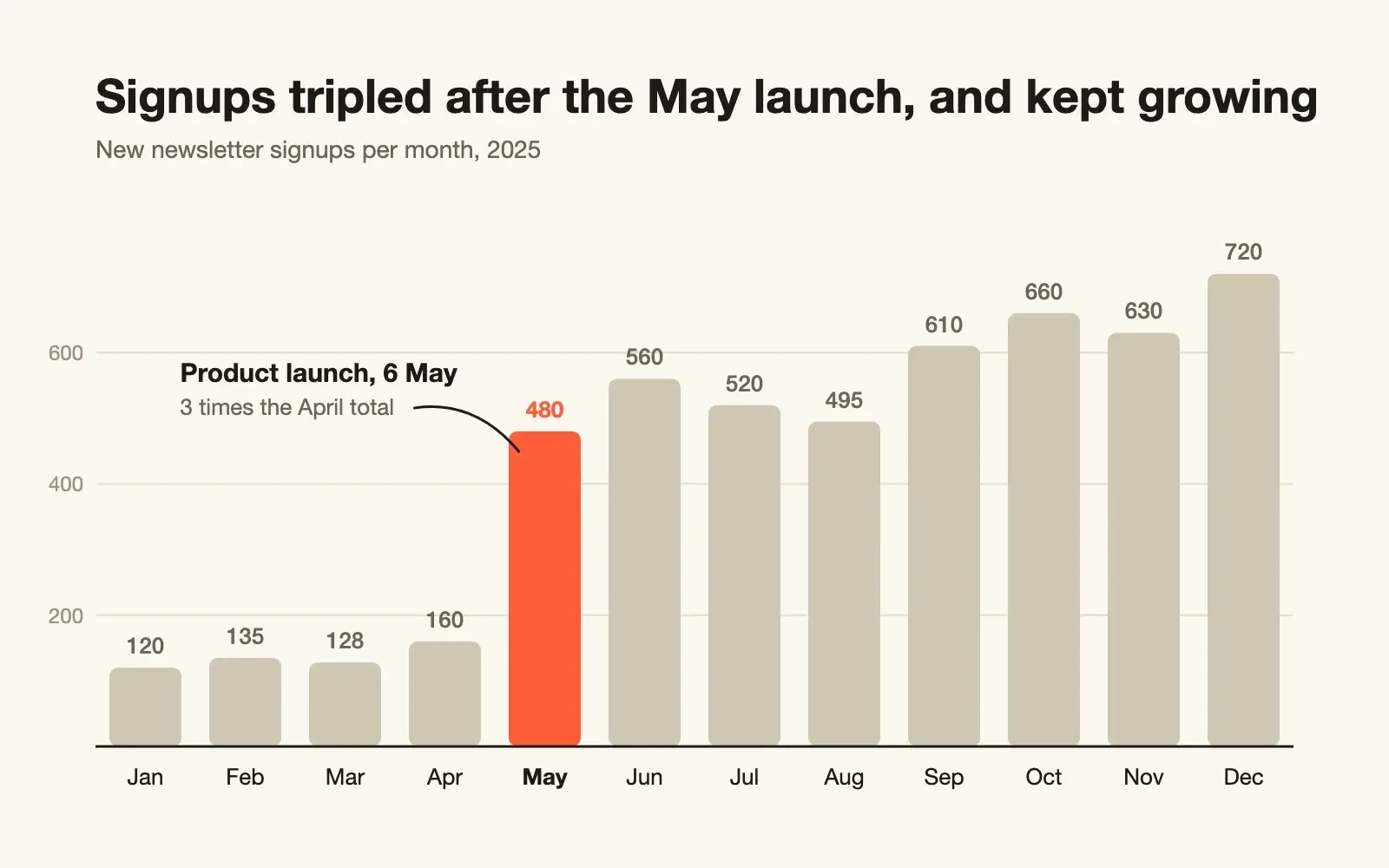
Paste raw CSV and get a clean SVG chart with sensible scales, labels on the data, and a title that says what the chart shows.
The case for rewriting Your current stack is why hiring takes four months. Good candidates see it and decline. Every feature takes about twice the estimate because of workarounds. A rewrite buys back years of speed, and the...
For big decisions. You get the strongest case for each side, the assumptions hiding underneath, and a cheap test to run before you commit.
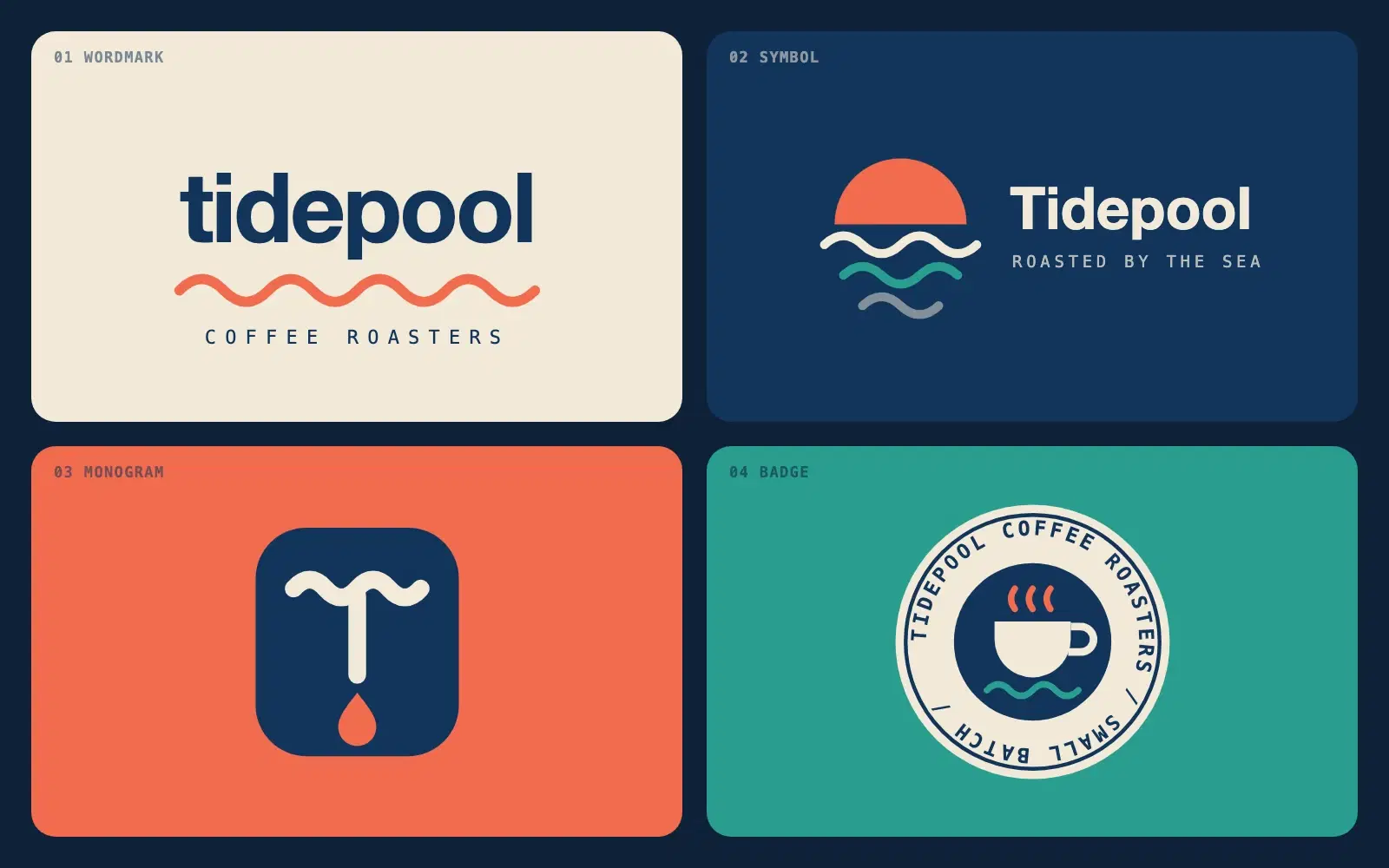
Describe a brand in one sentence and get four different logo directions as clean SVG you can open in a browser or drop into Figma.
One vote per prompt, a fresh count every Monday, and a simple tie-break. Everything about how prompts reach the top three, in plain words.
Wrapping parts of your prompt in simple tags is one of the easiest ways to get more reliable answers from Claude. A practical guide with examples.